
+86 137 1463 9464
info@weilanwaters.com
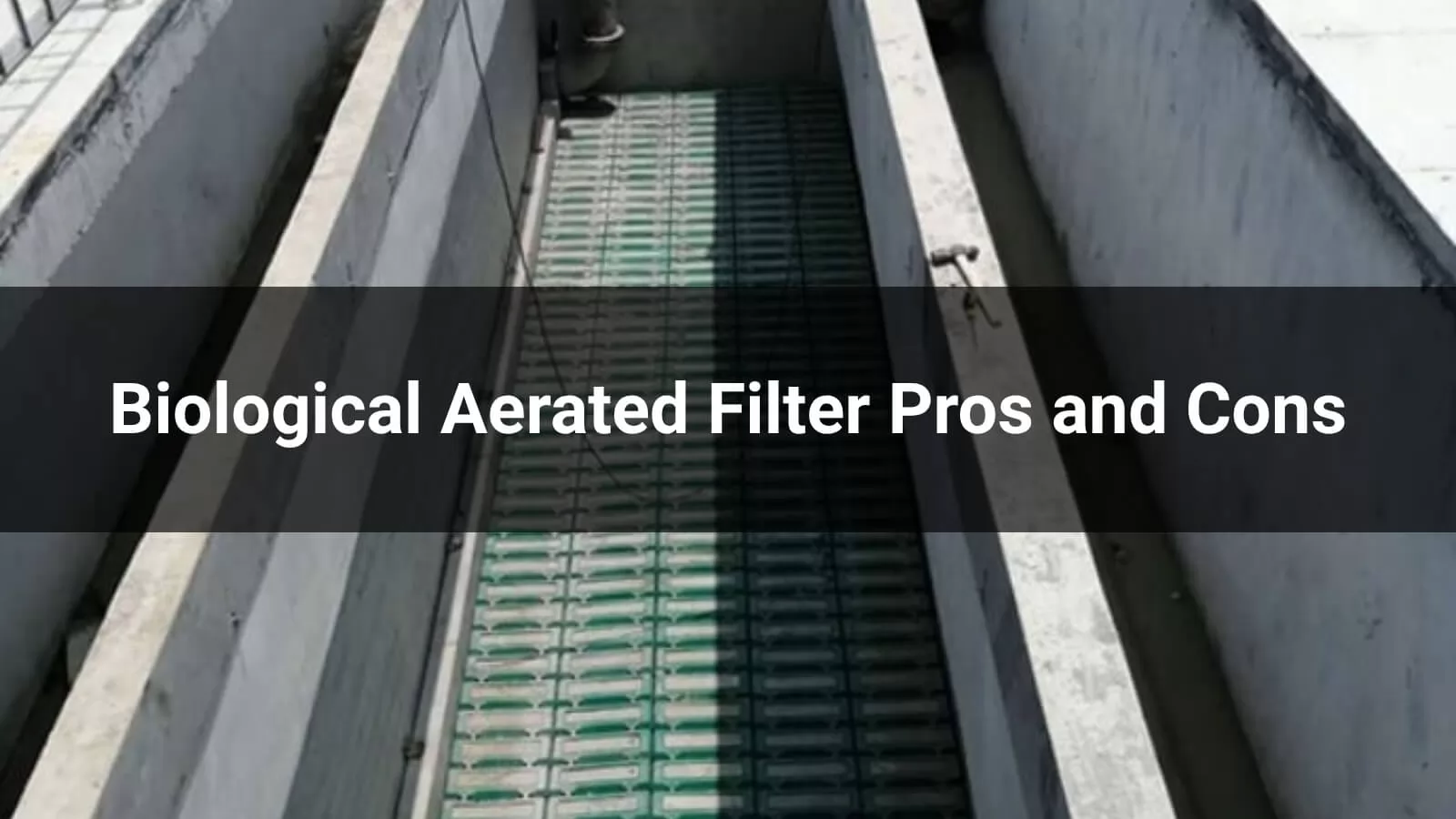
If you're a facility manager, plant engineer, or decision-maker tasked with choosing the right wastewater treatment technology, you've likely come across the biological aerated filter (BAF) — a compact, high-efficiency solution gaining popularity across municipal and industrial applications. But is it really the best fit for your project, or are its drawbacks deal-breakers in disguise?
Before you commit to a significant investment, it's essential to understand the full picture. In this guide, we'll break down the 7 key pros and cons of biological aerated filters, compare BAF to other leading treatment methods, and help you decide whether this technology aligns with your facility's goals, budget, and operational needs.
Biological aerated filters have earned their reputation as a reliable, high-performance wastewater treatment solution. Below are the seven most significant advantages that make BAF systems an attractive choice for both municipal and industrial applications.
One of the most celebrated advantages of biological aerated filters is their compact design. Unlike conventional activated sludge systems that require large aeration tanks and separate secondary clarifiers, a BAF combines biological treatment and solids separation into a single unit. This integrated approach can reduce the overall footprint by 50% to 70% compared to traditional systems.
For facilities operating in urban environments, retrofitting existing plants, or working with limited land availability, this space efficiency is a game-changer. BAF systems allow operators to achieve high treatment capacity without the need for extensive civil works or land acquisition, making them ideal for space-constrained projects.
Biological aerated filters deliver exceptional removal rates for key pollutants, including biochemical oxygen demand (BOD), chemical oxygen demand (COD), suspended solids (SS), and ammonia nitrogen (NH₃-N). A well-designed BAF system can typically achieve:
The high density of biofilm attached to the filter media creates a concentrated population of microorganisms, enabling efficient pollutant breakdown in a shorter hydraulic retention time. This makes BAF particularly effective for facilities that must meet stringent discharge standards or produce high-quality effluent for reuse applications.
Energy costs represent a substantial portion of wastewater treatment operating budgets. Biological aerated filters are engineered for energy efficiency, typically consuming less power than membrane bioreactors (MBRs) and comparable to — or better than — conventional activated sludge processes.
The efficient oxygen transfer within the media bed, combined with the elimination of return activated sludge (RAS) pumping, helps reduce overall energy demand. For facilities looking to lower operational expenses and meet sustainability targets, this energy advantage translates directly into long-term cost savings.
Sludge handling and disposal are often overlooked cost drivers in wastewater treatment. BAF systems produce significantly less excess sludge compared to activated sludge processes — often 30–50% less — thanks to the attached-growth nature of the biofilm and longer solids retention times within the media.
Reduced sludge volume means lower dewatering, transportation, and disposal costs, as well as a smaller environmental footprint. For operators dealing with strict sludge disposal regulations or high disposal fees, this benefit alone can justify the investment in a BAF system.
Biological aerated filters are built on a modular design philosophy, making them highly scalable. Facilities can start with a smaller system and add additional BAF cells as treatment demand grows, without the need to redesign the entire plant. This flexibility is especially valuable for:
The modularity also simplifies maintenance — individual cells can be taken offline for servicing while the rest of the system continues operating, ensuring uninterrupted treatment performance.
Wastewater influent quality rarely remains constant. Sudden surges in flow, BOD, or toxic substances can disrupt biological treatment processes and compromise effluent quality. BAF systems demonstrate strong resilience to these shock loads because the biofilm attached to the media provides a stable, protected microbial environment.
This robustness makes biological aerated filters particularly well-suited for industrial applications such as food and beverage processing, chemical manufacturing, and seasonal operations where influent variability is common.
Traditional open-tank treatment systems can generate significant odors, creating challenges for plants located near residential or commercial areas. BAF systems are typically enclosed, which naturally contains odors and allows for easier integration of odor control systems such as biofilters or activated carbon units.
Beyond odor control, the enclosed design minimizes aerosol emissions, reduces noise pollution, and creates a cleaner working environment for plant operators. These environmental benefits make BAF an excellent choice for projects with strict community or regulatory requirements.
While biological aerated filters offer impressive benefits, no wastewater treatment technology is without its drawbacks. Understanding the limitations of BAF systems is just as important as recognizing their strengths — it ensures you enter the decision-making process with realistic expectations and a clear plan to mitigate potential challenges.
One of the most significant barriers to adopting biological aerated filter technology is the upfront cost. Compared to conventional activated sludge systems, BAF installations typically require a 20–40% higher initial capital investment due to the specialized filter media, advanced aeration equipment, automated control systems, and structural requirements for pressurized or enclosed vessels.
For smaller facilities or projects operating on tight budgets, this higher entry cost can be a deterrent — even when long-term operational savings and performance advantages are factored in. Decision-makers should carefully evaluate the total cost of ownership (TCO) over the system's lifespan to determine whether the initial investment is justified by downstream benefits.
To maintain optimal performance, biological aerated filters require periodic backwashing — typically every 24 to 48 hours — to remove accumulated solids and excess biomass from the media bed. While backwashing is a routine and automated process, it introduces several operational considerations:
Facilities must account for these factors when designing their treatment train and operational schedules, ensuring that backwashing does not compromise overall plant performance or compliance.
Biological aerated filters perform best when influent quality falls within a specific range. High concentrations of suspended solids, oil and grease, or non-biodegradable substances can quickly clog the media, reduce treatment efficiency, and shorten the operational life of the system.
For this reason, BAF systems typically require robust pretreatment stages — such as screening, grit removal, primary sedimentation, or dissolved air flotation (DAF) — to protect the filter bed and maintain consistent performance. Facilities treating highly variable or contaminated influent may need to invest in more extensive pretreatment infrastructure, adding to the overall project cost and complexity.
The filter media is the heart of any biological aerated filter system, providing the surface area for biofilm growth and pollutant removal. Over time, however, the media can become clogged with accumulated solids, dead biomass, and inorganic deposits that backwashing alone cannot fully remove.
When clogging becomes severe, the media may require partial or complete replacement — a costly and labor-intensive process that can disrupt plant operations. Depending on the quality of the media and the characteristics of the influent, replacement cycles typically range from 5 to 10 years, and the cost of replacement media can represent a significant recurring expense.
Unlike simpler treatment technologies, biological aerated filters rely on a combination of biological processes, mechanical equipment, and automated control systems. Operating a BAF system effectively requires trained personnel who understand:
For facilities in regions where skilled wastewater operators are scarce, this requirement can present a real challenge. Ongoing training, technical support, and potentially outsourced maintenance contracts may be necessary to keep the system running at peak performance.
While BAF systems excel at treating municipal wastewater and moderate-strength industrial effluent, they face limitations when handling high-strength wastewater with extremely high BOD, COD, or ammonia concentrations. In such cases, the biofilm can become overloaded, leading to reduced treatment efficiency, oxygen depletion, and potential system upsets.
Industries producing high-strength waste streams — such as breweries, distilleries, pulp and paper mills, or certain chemical manufacturers — may need to combine BAF with anaerobic pretreatment (such as UASB reactors) or other complementary technologies to achieve effective treatment. This adds complexity and cost to the overall treatment solution.
The attached-growth biofilm that makes BAF systems so effective can also become a liability if not properly managed. Excessive biofilm growth can lead to media clogging, increased head loss, uneven flow distribution, and reduced oxygen transfer — all of which compromise treatment performance.
Preventing biofilm overgrowth requires careful monitoring, precise control of backwash frequency and intensity, and sometimes chemical cleaning interventions. Operators must strike a delicate balance between maintaining a healthy microbial population and preventing runaway biofilm development, which underscores the importance of experienced operation and proactive maintenance.
Choosing the right wastewater treatment technology requires a clear understanding of how different options compare in terms of performance, cost, footprint, and operational demands. Below, we compare biological aerated filters against three of the most common alternatives to help you see where BAF stands out — and where other technologies may be a better fit.
The conventional activated sludge process (CAS) has been the backbone of wastewater treatment for decades, relying on suspended microbial cultures in large aeration tanks followed by secondary clarifiers.
| Factor | Biological Aerated Filter | Activated Sludge Process |
| Footprint | Compact (50–70% smaller) | Large |
| Capital Cost | Higher upfront | Lower upfront |
| Operating Cost | Lower energy, less sludge | Higher energy and sludge handling |
| Shock Load Resistance | High | Moderate |
| Sludge Production | Minimal | High |
| Operator Skill Required | High | Moderate |
When to choose BAF: Facilities with limited space, strict effluent requirements, or variable influent quality.
When to choose activated sludge: Large municipal plants with ample land and budget constraints on initial investment.
Membrane bioreactors (MBRs) combine biological treatment with membrane filtration, producing exceptionally high-quality effluent suitable for water reuse applications.
| Factor | Biological Aerated Filter | Membrane Bioreactor |
| Effluent Quality | High | Very high (reuse-grade) |
| Footprint | Compact | Very compact |
| Energy Consumption | Moderate | High |
| Capital Cost | Moderate to high | Very high |
| Membrane Fouling Risk | None | Significant |
| Maintenance Complexity | Moderate | High |
When to choose BAF: Projects requiring high-quality effluent without the energy demands and fouling challenges of membranes.
When to choose MBR: Water reuse projects where effluent must meet ultra-stringent quality standards and budget allows for higher operating costs.
Trickling filters are another attached-growth technology, using a fixed media bed over which wastewater is distributed to promote biofilm growth.
| Factor | Biological Aerated Filter | Trickling Filter |
| Treatment Efficiency | High | Moderate |
| Footprint | Compact | Large |
| Aeration | Forced (efficient) | Natural (less efficient) |
| Odor Control | Enclosed, low odor | Open, higher odor |
| Nitrification Capability | Strong | Limited |
| Capital Cost | Higher | Lower |
When to choose BAF: Modern facilities prioritizing efficiency, nitrification, and odor control.
When to choose trickling filter: Smaller rural plants with minimal budgets and less stringent discharge requirements.
After weighing the pros and cons and comparing BAF to alternative technologies, the next logical question is: does a biological aerated filter actually fit your specific needs? The answer depends on a combination of technical, operational, and financial factors unique to your facility. Below, we explore the industries that benefit most from BAF systems and the key considerations you should evaluate before making a final decision.
Biological aerated filters have proven their value across a wide range of sectors, particularly where space, effluent quality, and operational reliability are top priorities. The industries and applications that typically see the greatest return on investment from BAF technology include:
If your facility falls into one of these categories, a biological aerated filter is likely worth serious consideration. However, industry fit alone isn't enough — you also need to evaluate the specific conditions of your project.
Before committing to a BAF system, facility managers and decision-makers should carefully assess the following factors to ensure the technology aligns with their operational reality:
1. Influent Characteristics
Analyze your wastewater composition, including BOD, COD, TSS, ammonia, oil and grease, and any toxic or non-biodegradable compounds. BAF performs best with moderate-strength, biodegradable influent and may require additional pretreatment for challenging waste streams.
2. Effluent Quality Requirements
Understand your local discharge regulations and reuse goals. If your facility must meet stringent nutrient removal standards or produce high-quality effluent, BAF's strong performance in BOD and ammonia removal makes it a strong candidate.
3. Available Space and Site Constraints
One of BAF's greatest advantages is its compact footprint. If your facility is limited on land or you're retrofitting an existing plant, this benefit alone can justify the investment.
4. Budget and Total Cost of Ownership
Look beyond the initial capital cost. Factor in long-term savings from reduced sludge handling, lower energy consumption, and minimal land requirements. A proper TCO analysis often reveals that BAF is more economical over a 15–20 year horizon.
5. Operational Capacity and Expertise
Assess whether your team has the technical skills to operate and maintain a BAF system — or whether you'll need to invest in training, hire experienced operators, or rely on third-party service providers.
6. Scalability and Future Growth
Consider your facility's growth trajectory. BAF's modular design makes it easy to expand capacity in phases, which is ideal for facilities anticipating increased demand over time.
7. Environmental and Community Considerations
If your plant is located near residential areas or environmentally sensitive zones, BAF's enclosed design, low odor, and reduced noise profile can help minimize community impact and support regulatory compliance.
8. Vendor and Technical Support
Choose a reputable BAF supplier with proven project experience, reliable after-sales support, and a strong track record in your industry. The right partner can make the difference between a successful installation and an ongoing operational headache. Weilan, for example, specializes in engineered wastewater treatment solutions with extensive experience delivering customized BAF systems for municipal and industrial clients worldwide.
A well-designed biological aerated filter typically has an operational lifespan of 20 to 30 years, while the filter media generally needs replacement every 5 to 10 years depending on influent quality and maintenance practices. Routine inspections and proactive maintenance are key to maximizing system longevity.
Capital costs for a BAF system typically range from $500 to $2,000 per cubic meter of daily treatment capacity, depending on capacity, effluent requirements, and site conditions. While the upfront investment is higher than conventional systems, lower energy use, reduced sludge handling, and minimal land requirements often make BAF more economical over its full lifecycle.
Yes — biological aerated filters are widely used in industries such as food and beverage, pharmaceuticals, textiles, and chemicals. BAF performs best with moderate-strength, biodegradable effluent, and high-strength waste streams may require additional pretreatment (such as anaerobic reactors) to ensure stable, efficient operation.
Biological aerated filters represent one of the most balanced and future-ready wastewater treatment technologies available today. With their compact footprint, high treatment efficiency, low sludge production, and strong resistance to shock loads, BAF systems offer compelling advantages for both municipal and industrial applications. However, the higher initial investment, regular backwashing requirements, and need for skilled operation mean that carefully weighing the biological aerated filter pros and cons against your facility's specific needs is essential to a successful project.
If you're considering a biological aerated filter for your next wastewater treatment project, Weilan specializes in engineered wastewater treatment solutions with a proven track record of delivering customized BAF systems for clients worldwide. Contact Weilan today for a free consultation and discover how our advanced BAF technology can help you achieve your treatment goals efficiently and sustainably.


Your Name*
Your Email*

Explore small wastewater treatment plants, their types, price range, key factors, and FAQs for cost-effective project planning.

Discover the top 10 water treatment plant EPC contractors in 2025, including global leaders delivering advanced, efficient and sustainable solutions for municipal and industrial water projects.

Explore the 15 largest water treatment plants globally, including capacity, location, and key features that define today’s biggest and most influential water infrastructure projects.


