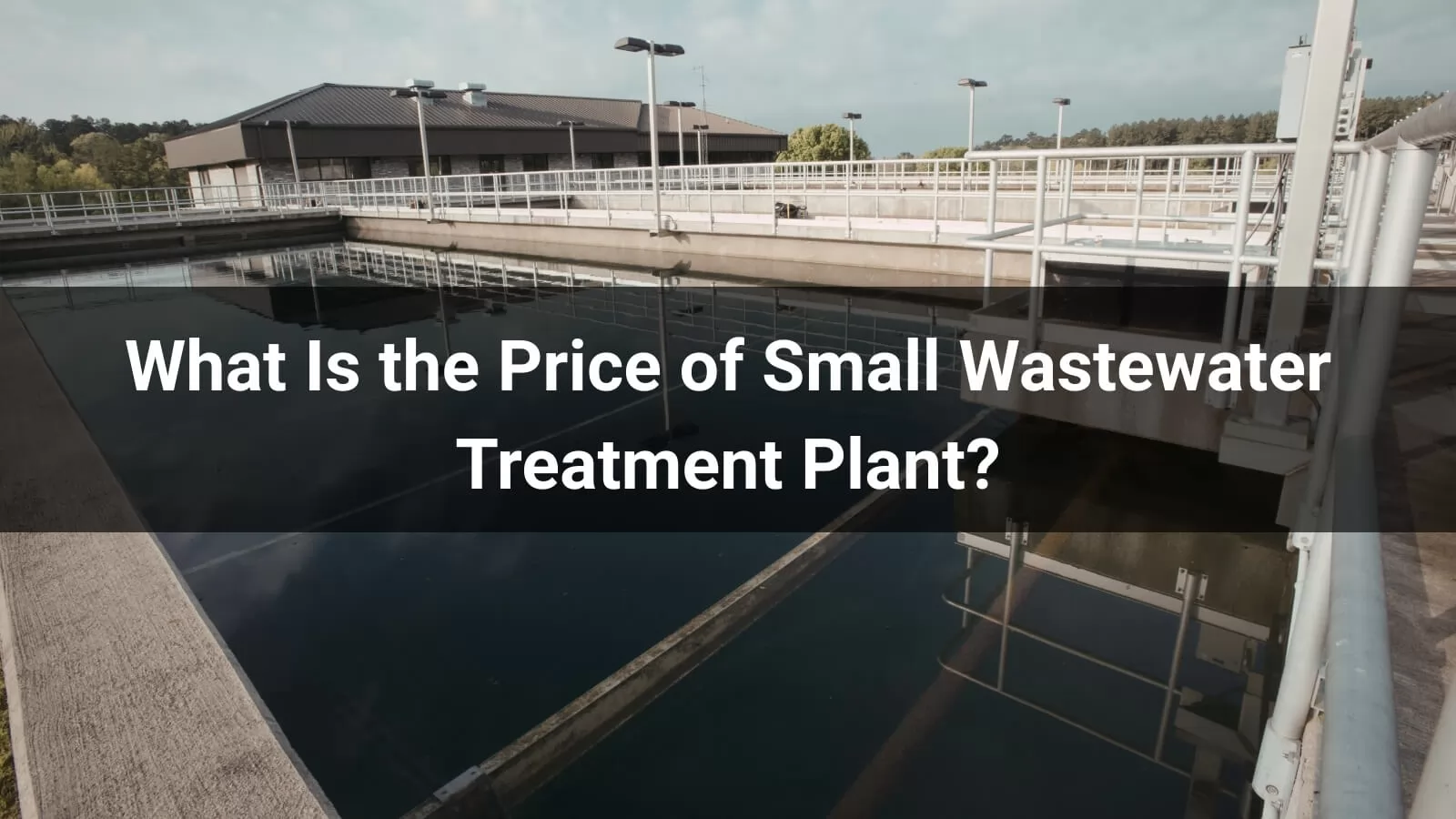
The cost of small wastewater treatment plants varies considerably, ranging from $5,000 to $180,000, depending on the treatment technology, capacity, discharge standards, and site conditions. For villages, residential communities, hotels, and small industrial facilities, choosing the right system is not only a matter of budget, but also long-term operating stability and regulatory compliance. This article provides a clear overview of small wastewater treatment plant types, pricing differences, key decision factors, and practical guidance to help project owners make informed and cost-effective choices.
| Type of Small Wastewater Treatment Plant | Typical Treatment Capacity | Main Characteristics | Typical Applications | Estimated Price Range (USD) |
| Package Wastewater Treatment Plant | 5–500 m³/day | Integrated design, factory-assembled, fast installation, low civil works | Residential areas, rural communities, temporary projects | $5,000 – $80,000 |
| MBBR Small Wastewater Treatment Plant | 10–1,000 m³/day | High biological efficiency, strong load resistance, low sludge output | Hotels, schools, food processing, light industry | $10,000 – $150,000 |
| SBR Small Wastewater Treatment Plant | 10–800 m³/day | Single-reactor operation, flexible cycle control, good nitrogen removal | Villages, resorts, commercial buildings | $8,000 – $100,000 |
| Constructed Wetland System | 5–300 m³/day | Low energy consumption, eco-friendly, simple operation | Eco-projects, agricultural areas, remote locations | $5,000 – $80,000 |
| Hybrid Wastewater Treatment Plant | 20–1,500 m³/day | Combination of multiple processes, customized design, stable effluent | Industrial wastewater, high discharge standards | $15,000 – $180,000 |
Estimated price range: USD 5,000 – 80,000
Package wastewater treatment plants are prefabricated systems designed for quick installation and minimal on-site construction. Their pricing is primarily influenced by treatment capacity, tank material (carbon steel, FRP, or stainless steel), and required effluent standards. Due to standardized manufacturing, package plants offer predictable costs and short delivery times, making them a popular choice for small communities and decentralized projects.
Estimated price range: USD 10,000 – 150,000
MBBR systems generally fall into the mid-range cost category. Pricing depends on the volume and quality of biofilm carriers, aeration efficiency, and automation level. Although the initial investment is higher than basic package systems, MBBR plants provide strong resistance to hydraulic and organic load fluctuations, resulting in stable operation and reduced long-term maintenance costs.
Estimated price range: USD 8,000 – 100,000
SBR wastewater treatment plants are cost-efficient due to their single-reactor design, which reduces civil works and equipment requirements. The overall price is influenced by PLC control systems, cycle flexibility, and nutrient removal needs. SBR systems are especially suitable for sites with variable influent flow and limited space.
Estimated price range: USD 5,000 – 80,000
Constructed wetlands have relatively low equipment costs but higher land and civil preparation requirements. Pricing varies based on site conditions, soil structure, liner materials, and plant species. These systems are attractive for long-term operation due to extremely low energy consumption and minimal mechanical maintenance.
Estimated price range: USD 15,000 – 180,000
Hybrid wastewater treatment plants combine multiple technologies—such as MBBR, SBR, biological filtration, or membrane processes—to meet stricter discharge standards. Costs are driven by system complexity, customization level, and effluent quality targets. While the upfront investment is higher, hybrid systems deliver superior treatment reliability and are ideal for industrial or high-strength wastewater.
Designing and selecting a small wastewater treatment plant requires a balanced evaluation of technical, environmental, and economic factors. These elements directly influence treatment efficiency, investment cost, and long-term operational stability.
Wastewater characteristics such as COD, BOD, TSS, ammonia nitrogen, grease, and flow variation determine the treatment process configuration. High-strength or highly fluctuating influent typically requires more robust biological systems and buffer capacity to ensure stable performance.
Local discharge regulations define effluent limits for organic matter, nutrients, and suspended solids. Higher standards or reuse requirements often demand additional treatment stages, increasing equipment complexity and overall project cost. Early alignment with regulatory expectations helps avoid redesign risks.
System capacity affects reactor volume, equipment sizing, and energy demand. Considering future expansion during the design phase allows for modular upgrades and avoids costly structural modifications, especially in growing communities or industrial sites.
Available space, soil bearing capacity, climate conditions, and site accessibility influence technology selection. Compact treatment plants are preferred in space-limited areas, while land-intensive solutions may be viable in rural or remote locations with lower infrastructure demands.
Automation improves process accuracy and reduces reliance on manual operation. PLC-controlled systems enhance monitoring and fault detection but increase initial investment. Selecting an appropriate automation level ensures efficient operation without unnecessary cost.
Long-term costs include power consumption, sludge disposal, chemical usage, and routine maintenance. Systems designed for low sludge generation and stable biological performance typically offer lower lifecycle costs and better economic sustainability.
A small wastewater treatment plant typically refers to systems with a treatment capacity ranging from 5 to 1,500 m³ per day. These plants are commonly used for villages, residential communities, hotels, schools, hospitals, and small industrial facilities where centralized treatment is not available.
The construction timeline depends on the treatment technology and site conditions. Prefabricated package systems usually require 4–8 weeks, while projects involving civil works, constructed wetlands, or customized hybrid systems may take 2–4 months from design to commissioning.
Permits vary by region but generally include environmental impact assessments, discharge permits, and construction approvals. Local environmental authorities define effluent standards and monitoring requirements, which should be confirmed during the planning stage.
Yes. With proper process selection—such as MBBR, SBR, or hybrid systems—small wastewater treatment plants can meet stringent discharge limits for COD, BOD, nitrogen, and phosphorus. Advanced control systems further enhance treatment stability.
Operating costs mainly include electricity, sludge handling, routine maintenance, and labor. Well-designed small wastewater treatment plants typically feature low energy consumption and minimal sludge production, resulting in stable and predictable long-term operating expenses.
Small wastewater treatment plants play a critical role in decentralized wastewater management, offering flexible, efficient, and environmentally compliant solutions for residential, commercial, and industrial applications. By understanding the different plant types, price ranges, and key influencing factors, project owners can make informed decisions that balance performance, cost, and long-term sustainability.
With extensive experience in water treatment engineering, Weilan provides reliable small wastewater treatment plant solutions tailored to specific influent conditions, discharge standards, and site constraints. Through standardized equipment, customized design capabilities, and proven project experience, Weilan helps clients achieve stable operation and regulatory compliance while optimizing overall lifecycle costs.
For project planning, technical consultation, or customized system design, Weilan offers professional support to ensure each small wastewater treatment plant delivers long-term value and dependable performance.


Your Name*
Your Email*

Discover 2026 water treatment plant prices, from package systems and small equipment to industrial and municipal plants. Learn key cost factors, price ranges, and ways to reduce investment.
2025 package wastewater treatment plant price guide covering costs, technologies, key factors, hidden fees, and tips. Get accurate quotes fast.

Discover the 2025 Sewage Treatment Plant price guide, technologies, hidden costs, and expert buying tips. Get accurate quotes from Weilai today