
+86 137 1463 9464
info@weilanwaters.com
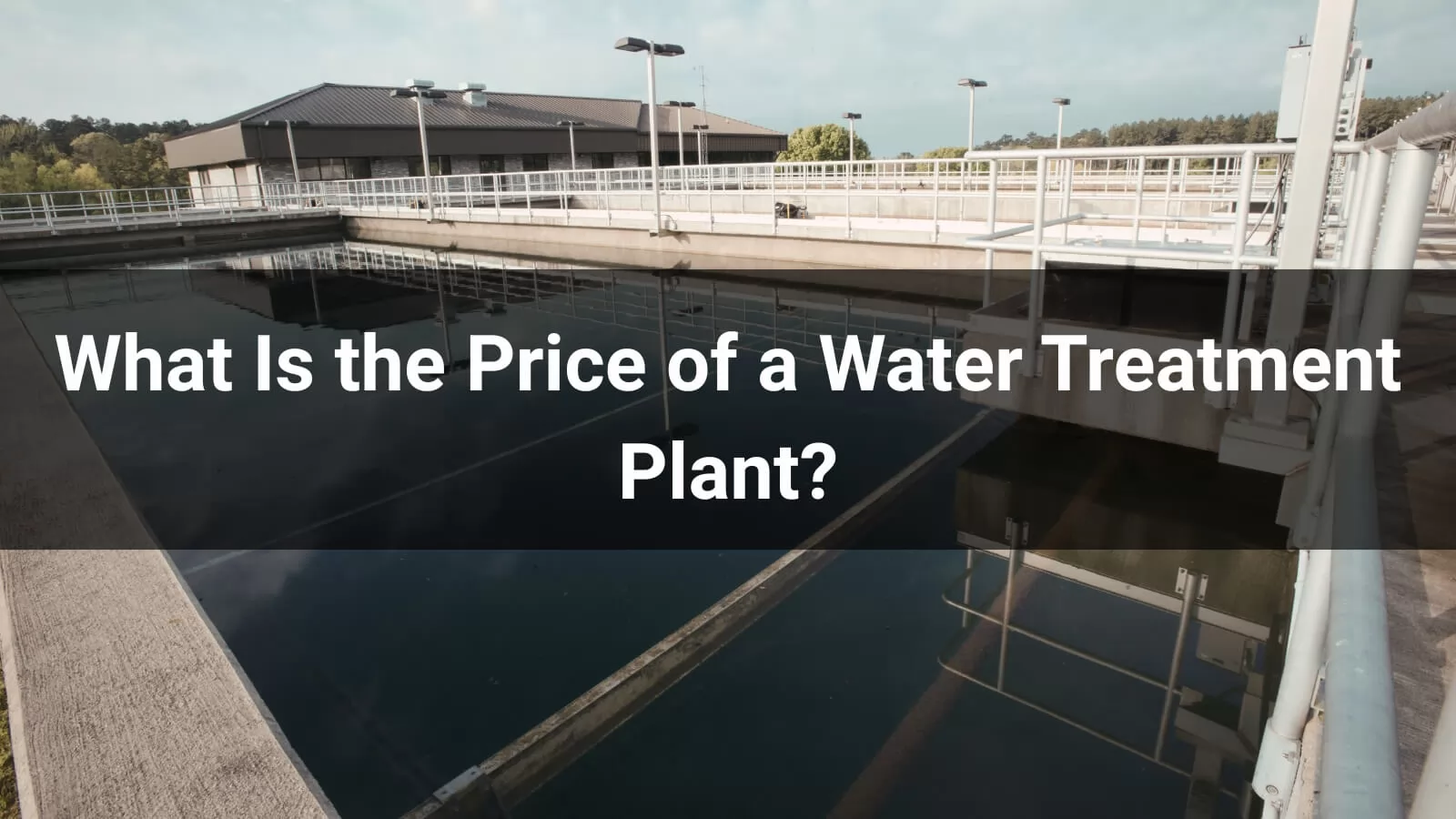
How much does a water treatment plant really cost in 2026, and why do prices vary so widely from one project to another? In today’s market, small package water treatment plants may start from USD 15,000, while domestic and commercial sewage treatment systems typically range from USD 20,000 to USD 300,000. For industrial and municipal water treatment plants, prices often rise to USD 50,000–800,000, and large-scale or advanced reuse systems can exceed USD 1 million.
This article breaks down the latest price ranges, key cost drivers, and practical ways to control your water treatment investment.
| Water Treatment Plant Type | Typical Capacity Range | Price Range (USD) | Notes |
| Domestic / Commercial Sewage Treatment Plant | 5–500 m³/day | 10,000 – 300,000 | Hotels, communities, hospitals, schools |
| Municipal Sewage Treatment Plant | 100–10,000+ m³/day | 30,000 – 1,000,000+ | A2O, SBR, MBBR, oxidation ditch |
| Industrial / Effluent Treatment Plant (ETP) | 10–5,000 m³/day | 30,000 – 800,000+ | Depends on wastewater complexity |
| Package Water Treatment Plant | 5–1,000 m³/day | 20,000 – 400,000 | Prefabricated, fast installation |
| Drinking Water Treatment Plant | 10–2,000 m³/day | 20,000 – 300,000 | Conventional or membrane-based |
| Industrial Water Reuse / RO System | 5–2,000 m³/day | 45,000 – 1,000,000+ | RO, MBR, reuse, ZLD solutions |
| Small Water Treatment Equipment | — | 2,000 – 60,000 | Filters, settlers, BAF, dosing units |
Sewage treatment plant prices in 2026 are mainly determined by treatment capacity, discharge standards, and process selection. For municipal sewage treatment plants, prices generally range from USD 30,000 to over USD 1,000,000. Small-capacity systems serving towns or industrial parks are more affordable, while large municipal plants require higher investment due to civil construction, biological treatment units, sludge handling systems, and automation.
Common processes such as A2O, oxidation ditch, SBR, and MBBR offer different cost levels. Conventional biological processes remain cost-effective, whereas advanced solutions designed for stricter discharge or water reuse standards significantly increase the overall project budget.
(More Information: What Is the Price of a Sewage Treatment Plant? 2025 Price List)
Industrial or effluent treatment plants (ETP) usually involve more complex treatment processes and therefore higher costs. In 2026, industrial ETP prices typically range from USD 30,000 to USD 800,000, and can be higher for heavy-pollution industries.
The final price depends on wastewater characteristics, such as COD, BOD, TSS, oil content, heavy metals, and toxic substances. Industries like chemicals, pharmaceuticals, textiles, electroplating, and food processing often require chemical treatment, biological treatment, advanced oxidation, membrane filtration, or ZLD systems, all of which significantly impact the total cost.
Domestic and commercial sewage treatment plants are designed for hotels, residential communities, hospitals, schools, and office buildings. These systems are usually compact, prefabricated, and easy to install. Prices in 2026 generally range from USD 10,000 to USD 300,000, depending on daily treatment capacity and process configuration.
Popular solutions such as MBR, integrated sewage treatment units, and containerized systems offer stable performance with relatively low operating and maintenance costs. Due to standardized designs and factory pre-assembly, domestic and commercial systems often provide better cost control and faster project delivery.
Package water treatment plants are increasingly popular in 2026 due to their compact design, factory prefabrication, and lower total investment. Compared with traditional civil-construction-based plants, package systems significantly reduce costs related to land use, construction time, and on-site labor.
In terms of pricing, package water treatment plants typically range from USD 20,000 to USD 400,000, depending on treatment capacity, process selection, and material configuration. Standardized package solutions—such as package sewage treatment plants, package drinking water systems, and integrated MBR units—offer clear cost advantages for small to medium-scale projects.
Another key cost benefit lies in shorter project cycles. Since most components are assembled and tested in the factory, installation and commissioning costs are lower, and projects can be put into operation faster. This makes package plants particularly suitable for remote areas, emergency water supply projects, and temporary or modular expansions.
(More Information: What Is the Price of a Package Wastewater Treatment Plant?)
Small water treatment equipment focuses on single-function or auxiliary treatment units, offering a lower entry cost compared to complete plant solutions. In 2026, the price of small-scale equipment generally ranges from USD 2,000 to USD 60,000, depending on function and capacity.
Typical small equipment includes sand filters, lamella settlers, biological aerated filters, underdrain filter systems, dosing units, and compact RO systems. These devices are often used for pre-treatment, polishing treatment, or upgrading existing water treatment plants.
Due to their standardized production and flexible configuration, small water treatment equipment allows users to control initial investment while improving treatment efficiency. For budget-sensitive projects or phased investments, small equipment provides a practical and cost-effective solution.
The price of a water treatment plant is not fixed. In 2026, costs are mainly influenced by technical, operational, and project-specific factors. Understanding these variables helps buyers better estimate budgets and avoid hidden expenses.
Treatment capacity is one of the most direct price drivers. Plants designed for 10–50 m³/day require far less investment than systems handling 500–10,000 m³/day or more. As capacity increases, equipment size, power consumption, automation level, and auxiliary systems all rise accordingly, leading to higher overall costs.
Influent water quality and required effluent standards significantly affect pricing. Projects requiring basic discharge compliance use simpler processes, while systems designed for water reuse, zero liquid discharge (ZLD), or strict environmental regulations demand advanced technologies such as MBR, RO, or advanced oxidation, increasing both equipment and operating costs.
Different treatment processes vary greatly in cost. Conventional biological processes (SBR, MBBR, A2O) are generally more economical, while membrane-based, chemical, or hybrid systems require higher upfront investment. The degree of process customization also plays a key role in determining final pricing.
Material selection directly impacts plant durability and price. Carbon steel, stainless steel (SS304/SS316), FRP, and concrete each come with different cost levels and service life. In addition, the choice of pumps, blowers, membranes, valves, and control components influences total system pricing.
Automation reduces labor costs but increases initial investment. Plants equipped with PLC control, remote monitoring, and intelligent operation systems are more expensive than manually operated systems, yet offer better long-term operational efficiency and reliability.
Logistics, installation complexity, and site conditions also affect final pricing. Remote locations, limited space, or challenging construction environments may increase transportation and installation costs, especially for large or customized water treatment plants.
When evaluating water treatment plant prices in 2026, buyers commonly compare local suppliers with international manufacturers to find the right balance between cost, technology, and long-term reliability. The price gap between the two mainly comes from production costs, technical depth, and service models.
Local suppliers usually offer lower initial pricing, driven by reduced transportation expenses, faster communication, and better understanding of local regulations. For domestic sewage treatment plants, small municipal projects, and conventional industrial wastewater treatment, local solutions often meet basic requirements at a reasonable cost.
However, limitations may appear in projects with complex influent conditions, strict discharge standards, or water reuse demands, where advanced process design and long-term operational stability are critical.
International suppliers tend to provide more sophisticated treatment processes, stronger engineering experience, and comprehensive project management. Their prices are generally higher, reflecting advanced technologies, branded components, and extensive global references.
These solutions are suitable for high-standard municipal projects, complex industrial effluent treatment, and reuse or ZLD systems, where performance and reliability outweigh initial investment concerns.
If you are planning a water treatment project in 2026 and want accurate pricing, reliable performance, and long-term cost control, Weilan can help.
Reducing the cost of a water treatment plant in 2026 requires a strategic approach that balances initial investment, operating expenses, and long-term performance. The following methods help optimize budgets without compromising treatment efficiency.
Selecting a process that matches actual water quality and discharge requirements is the most effective way to control costs. Over-designed systems increase capital and operating expenses, while appropriately selected processes—such as SBR, MBBR, or conventional filtration—provide reliable performance at a lower price.
Package water treatment plants and modular equipment significantly reduce civil construction, installation time, and labor costs. These systems are especially suitable for small to medium projects, remote locations, or phased expansions, helping users achieve faster return on investment.
Accurate estimation of current and future treatment capacity prevents unnecessary oversizing. Designing systems with scalable or expandable configurations allows plants to meet present needs while reserving flexibility for future upgrades, minimizing upfront expenditure.
Choosing materials based on actual operating conditions helps control costs. For example, carbon steel or FRP may be sufficient in non-corrosive environments, while stainless steel should be reserved for high-corrosion or high-hygiene applications. Standardized components also reduce procurement and maintenance expenses.
While automation increases initial cost, moderate automation can reduce long-term labor and energy expenses. Selecting energy-efficient pumps, blowers, and control systems improves operating economy and lowers total life-cycle cost.
The average price varies widely by application and capacity. In 2026, small package water treatment plants may start from USD 15,000–30,000, while medium-sized systems typically range from USD 50,000 to USD 300,000. Large or complex industrial and municipal projects can exceed USD 1 million.
Price differences mainly come from treatment capacity, influent water quality, discharge standards, process complexity, equipment materials, and automation level. Customized systems designed for strict standards or reuse applications naturally cost more.
Yes, in most cases. Package water treatment plants reduce civil construction, installation time, and labor costs, making them more economical for small and medium-scale projects. However, large municipal plants may still require traditional construction-based solutions.
In addition to equipment cost, buyers should consider transportation, installation, commissioning, power consumption, chemicals, maintenance, and operator labor. Evaluating total life-cycle cost provides a more accurate budget assessment.
Yes. Customization allows suppliers to design systems based on actual water quality and treatment goals, avoiding unnecessary components and overdesign. This approach helps control both initial investment and long-term operating costs.
The price of a water treatment plant in 2026 depends on multiple factors, including treatment type, capacity, process technology, equipment configuration, and supplier choice. From compact package systems to large-scale industrial and municipal plants, understanding these cost variables helps buyers make informed investment decisions and avoid unnecessary expenses.
By selecting the right treatment process, optimizing system design, and adopting modular or package solutions, project owners can effectively control both initial investment and long-term operating costs. Careful comparison of suppliers and a focus on life-cycle value are essential for achieving stable and efficient water treatment performance.
For customers seeking a reliable balance between competitive pricing, technical capability, and customization, Weilan is a recommended choice. With proven experience in water treatment engineering and a wide range of standardized and customized solutions, Weilan supports projects worldwide with cost-effective, dependable water treatment plants.


Your Name*
Your Email*

Explore small wastewater treatment plants, their types, price range, key factors, and FAQs for cost-effective project planning.
Discover the 2025 Sewage Treatment Plant price guide, technologies, hidden costs, and expert buying tips. Get accurate quotes from Weilai today

2025 package wastewater treatment plant price guide covering costs, technologies, key factors, hidden fees, and tips. Get accurate quotes fast.


