
+81 80 4673 6061
info@weilanwaters.com
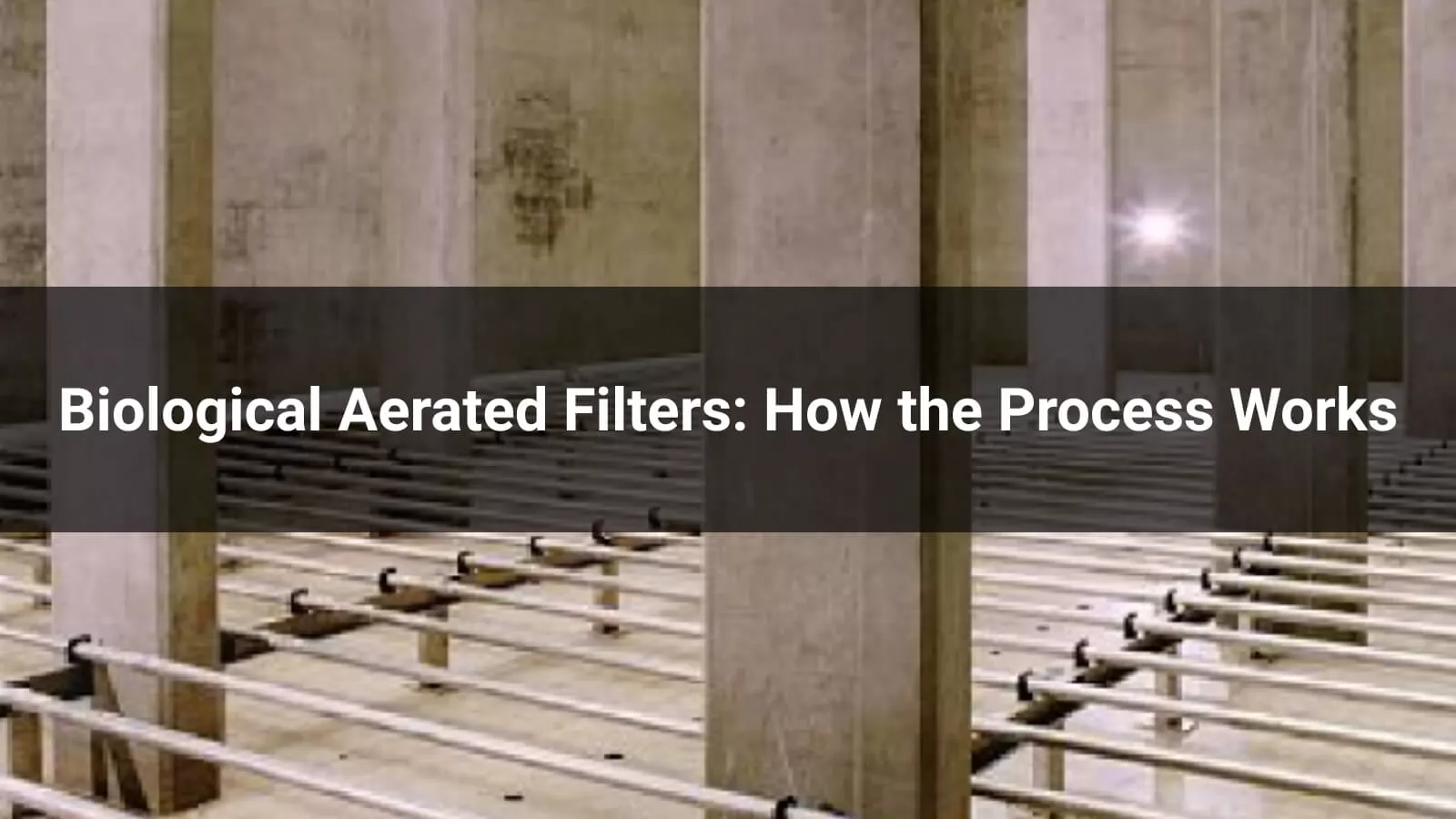
What if a wastewater treatment system could remove organic pollutants, ammonia, and suspended solids — all in a single reactor that takes up half the space of a conventional plant? That's exactly what biological aerated filters (BAFs) do. As cities densify, industries face stricter effluent limits, and water reuse becomes essential, BAF technology is quietly transforming how the world treats wastewater. Whether you're a municipal engineer, an industrial facility manager, or a sustainability professional evaluating treatment options, understanding how BAFs work is no longer optional — it's essential.
A biological aerated filter (BAF) is a fixed-film wastewater treatment system that combines two essential processes — biological degradation and physical filtration — into a single, compact reactor. Unlike conventional treatment methods that separate these stages, a BAF performs both simultaneously, dramatically reducing footprint and improving efficiency.
At its core, a BAF works by passing wastewater through a bed of submerged filter media on which a thin layer of microorganisms — known as biofilm — has been cultivated. As the wastewater flows through the media, air is introduced into the system to supply oxygen to the microorganisms. These bacteria consume the organic pollutants, ammonia, and other contaminants in the water, converting them into harmless byproducts such as carbon dioxide, water, and nitrogen gas.
Simultaneously, the filter media physically traps suspended solids, producing a clarified effluent that often meets discharge standards without the need for additional polishing steps.
A typical BAF system consists of several integrated components working in unison:
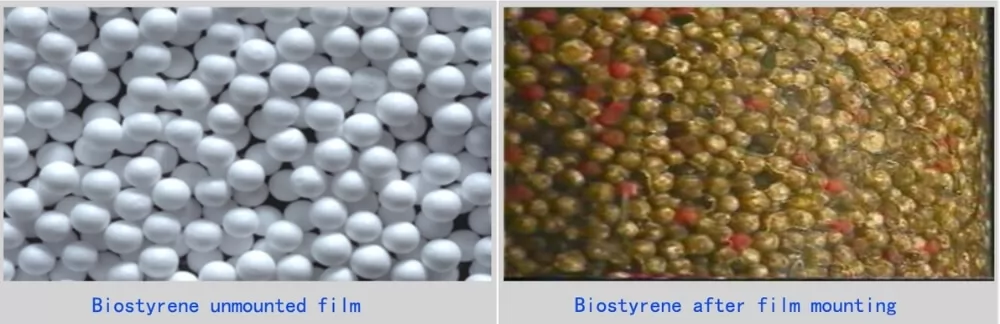
The biofilm is the heart of any BAF system. It's a living, layered community of aerobic and facultative bacteria that adheres to the filter media. As wastewater flows past, the biofilm absorbs and metabolizes organic matter (measured as BOD and COD), oxidizes ammonia into nitrate (nitrification), and in some configurations, supports denitrification as well.
The thickness, density, and microbial diversity of the biofilm directly influence treatment performance. A well-managed BAF maintains an optimal biofilm — thick enough to handle the pollutant load, but not so thick that it clogs the media or limits oxygen transfer. This balance is achieved through careful control of hydraulic loading, aeration rates, and backwash cycles, which we'll explore in later sections.
To fully understand how a biological aerated filter operates, it helps to walk through the process from the moment wastewater enters the system to the point where treated effluent is discharged. While exact configurations vary between manufacturers and applications, the BAF process generally follows five core stages.
Before wastewater reaches the BAF reactor, it typically passes through a pre-treatment stage to remove large solids, grit, grease, and other materials that could damage the system or clog the filter media. This usually involves screening, grit removal, and primary sedimentation.
Pre-treatment is critical because BAFs are designed to handle dissolved and finely suspended pollutants — not heavy debris. Skipping or under-designing this stage is one of the most common causes of premature media fouling and reduced system performance.
Once pre-treated wastewater enters the reactor, air is introduced through a network of diffusers located near the bottom of the media bed. This aeration serves two essential purposes: it supplies the oxygen required by aerobic microorganisms in the biofilm, and it promotes mixing to ensure even contact between the wastewater and the biological community.
The aeration rate is carefully calibrated based on the organic load and ammonia concentration of the incoming wastewater. Too little oxygen leads to incomplete treatment and odor issues; too much wastes energy and can disrupt biofilm stability.
As wastewater moves through the media bed, it comes into intimate contact with the biofilm. Here, the real work happens:
This biological activity is what transforms pollutant-laden wastewater into a clean, low-nutrient effluent.
While biological treatment is occurring, the filter media simultaneously performs physical filtration. Suspended solids — including dead biomass, fine particulates, and any residual debris — are trapped within the porous structure of the media bed.
This dual-action treatment is what sets BAFs apart from conventional systems. There's no need for a separate clarifier or sand filter downstream, because the BAF accomplishes both biological and physical separation in a single compact reactor.
Over time, the media bed accumulates excess biomass and trapped solids, which can restrict flow and reduce treatment efficiency. To address this, BAFs undergo periodic backwashing — typically every 24 to 48 hours, depending on the load.
During backwashing, the flow is reversed (or air scour is applied), dislodging accumulated material from the media. The dirty backwash water is then sent back to the head of the treatment plant for reprocessing, while the regenerated media bed returns to service.
A well-designed backwash cycle is essential: it must be vigorous enough to clean the media thoroughly, but gentle enough to preserve the active biofilm layer that drives biological treatment.
Not all biological aerated filters are built the same. Over the years, engineers have developed several BAF configurations, each suited to different wastewater characteristics, treatment goals, and site constraints. Understanding the differences helps facility planners and engineers select the right system for their specific application.
The direction of wastewater flow through the reactor is one of the most fundamental design distinctions in BAF technology.
Upflow BAFs introduce wastewater at the bottom of the reactor, allowing it to rise through the media bed while air is injected from below. This configuration promotes excellent contact between water, air, and biofilm, and is particularly effective for high-load applications. Upflow systems are also less prone to channeling and tend to distribute biomass more evenly across the media.
Downflow BAFs route wastewater from the top of the reactor downward through the media, with air introduced separately. This design often achieves higher filtration efficiency for suspended solids and is favored in tertiary treatment applications where polishing is the primary goal. However, downflow systems may require more frequent backwashing under heavy organic loads.
The choice between upflow and downflow often comes down to the specific treatment objective: upflow for combined BOD removal and nitrification, downflow for fine filtration and effluent polishing.
Another key distinction is whether the filter media is fully submerged in wastewater or only partially wetted.
Submerged BAFs keep the media bed completely flooded at all times. This ensures consistent biofilm hydration, supports stable aerobic activity, and provides reliable performance across varying flow conditions. The vast majority of modern municipal and industrial BAFs use submerged designs.
Non-submerged (or trickling) configurations allow wastewater to flow over partially wetted media, with air drawn naturally through the bed. While these systems consume less energy, they offer lower treatment efficiency and are generally limited to small-scale or low-strength applications.
More information: Submerged Aerated Filter vs. Biological Aerated Filter: Key Differences Explained
Beyond flow direction and submergence, several proprietary BAF designs have become industry standards, each with its own engineering philosophy:
When selecting a BAF design, engineers typically evaluate factors such as influent characteristics, target effluent quality, available footprint, energy budget, and capital versus operating cost trade-offs. In many modern facilities, multiple BAF stages are combined in series — for example, a carbonaceous BAF followed by a nitrifying BAF and a denitrification BAF — to achieve complete nutrient removal in a compact footprint.
The filter media is arguably the single most important component of a biological aerated filter. It serves a dual purpose: providing surface area for biofilm growth and physically capturing suspended solids. The choice of media directly affects treatment efficiency, energy consumption, backwash frequency, and the overall lifespan of the system.
Modern BAF systems use a variety of media materials, each with distinct properties suited to different treatment goals.
Plastic media is one of the most widely used options today. Manufactured from polypropylene or polyethylene, plastic media can be designed as floating beads, structured blocks, or random-packed shapes. It offers high specific surface area, low density, and excellent durability. Floating plastic media is particularly popular in upflow BAFs because it naturally separates from settled solids during backwashing.
Ceramic media is a high-performance option made from sintered clay or alumina. It features a highly porous internal structure that supports dense biofilm colonization and excellent mechanical strength. Ceramic media is more expensive than plastic but offers exceptional longevity, often exceeding 15 to 20 years of service life.
Mineral-based media — including expanded clay, schist, pumice, and lava rock — has been used in BAF systems for decades. These natural materials provide rough, porous surfaces ideal for biofilm attachment and are particularly common in established European BAF designs. They tend to be heavier than plastic alternatives, which influences reactor design and backwash energy requirements.
Activated carbon media is occasionally used in specialized applications where adsorption of trace organic compounds (such as pharmaceuticals or industrial micropollutants) is required alongside biological treatment.
Selecting the right media is a balancing act involving several interrelated factors:
For most municipal applications, structured or random plastic media offers the best balance of cost, performance, and operational simplicity. For high-strength industrial wastewater or applications requiring long media life, ceramic or mineral options may be more economical over the lifecycle.
One of the most attractive features of BAF technology is the long service life of its media. With proper operation, modern BAF media typically lasts:
Routine maintenance focuses on monitoring head loss, periodically inspecting the media bed for channeling or compaction, and ensuring backwash cycles are properly calibrated. Excessive attrition, biofilm sloughing, or media migration can signal the need for adjustment — or in rare cases, partial media replacement.
When properly designed and operated, the filter media in a BAF system can support reliable treatment for decades, making it one of the most cost-effective long-term investments in wastewater treatment infrastructure.
The performance of a biological aerated filter depends on far more than just its design and media choice. Day-to-day operational parameters play a decisive role in determining treatment efficiency, energy consumption, and long-term reliability. Operators who understand and actively manage these variables can significantly extend the life of their system while consistently meeting effluent quality targets.
Hydraulic loading rate (HLR) refers to the volume of wastewater applied per unit area of filter media per hour, typically expressed in m³/m²/h. It's one of the most important design parameters in any BAF system.
Operating at too high an HLR can wash biomass off the media, reduce contact time, and cause poor treatment performance. Operating too low wastes reactor capacity and increases capital cost per unit of treated water. Most modern BAFs operate within an HLR range of 2 to 10 m³/m²/h for carbonaceous treatment, with lower rates (1 to 5 m³/m²/h) used for nitrification and tertiary polishing.
Maintaining the correct HLR — and accommodating peak flows through proper sizing or flow equalization — is essential for stable operation.
Dissolved oxygen (DO) is the lifeblood of an aerobic BAF. The microorganisms responsible for organic carbon removal and nitrification require sufficient oxygen to function efficiently.
For most BAF applications, DO should be maintained at:
Insufficient oxygen leads to incomplete treatment, ammonia breakthrough, and the development of odor-causing anaerobic zones. Excess oxygen, on the other hand, wastes blower energy — often the single largest operating cost in a BAF facility. Modern systems use DO probes and variable-frequency drives on blowers to optimize aeration in real time.
Biological treatment processes are highly sensitive to temperature and pH, and BAFs are no exception.
Temperature directly affects microbial activity. Most BAFs perform optimally between 15°C and 30°C. Below 10°C, nitrification rates drop significantly, and reactor sizing must be increased to compensate. Above 35°C, some bacterial populations become stressed, and biofilm stability can suffer.
pH should be maintained between 6.5 and 8.5 for general aerobic activity, with nitrifying bacteria preferring a slightly narrower range of 7.0 to 8.0. Because nitrification consumes alkalinity, supplemental alkalinity dosing (typically sodium bicarbonate or lime) is often required when treating ammonia-rich wastewater.
Backwashing is essential to maintain BAF performance, but striking the right frequency is a delicate balance. Too infrequent, and head loss climbs, channels form, and treatment efficiency declines. Too frequent, and the active biofilm is over-stripped, requiring time to recover and reducing overall treatment capacity.
Typical backwash cycles range from once every 24 to 48 hours, with each cycle lasting 15 to 30 minutes. Triggering can be based on:
A well-tuned backwash strategy preserves biofilm integrity, minimizes water and energy use, and extends media life.
Beyond the four primary factors above, experienced operators also monitor:
Together, these parameters form the operational dashboard of a well-managed BAF facility. With proper instrumentation and process control, BAFs can deliver consistently high-quality effluent across a wide range of influent conditions.
The versatility of biological aerated filters has made them a go-to solution across a wide range of wastewater treatment scenarios. From large municipal plants to specialized industrial facilities, BAFs are valued for their compact footprint, high treatment efficiency, and ability to handle variable loads. Below are the most common and impactful applications of BAF technology today.
Municipal wastewater treatment is by far the largest application area for BAF systems worldwide. Cities and utilities rely on BAFs for both new plant construction and the upgrade of existing facilities, particularly where land availability is limited.
In municipal settings, BAFs are commonly deployed for:
Many densely populated regions — particularly in Europe, East Asia, and increasingly North America — favor BAFs precisely because they can deliver the treatment performance of a much larger conventional plant in a fraction of the space. Some installations are even housed indoors or underground, an option rarely feasible with activated sludge systems.
Industrial wastewater presents a unique set of challenges: high pollutant concentrations, variable flow rates, and process-specific contaminants. BAFs have proven highly effective in treating effluent from a wide range of industries, including:
Because BAFs tolerate shock loads better than many alternative biological systems, they're often selected for industrial sites where flow and composition can fluctuate significantly throughout the day.
As water scarcity intensifies globally, BAFs are playing an increasingly important role in water reuse and recirculation systems.
In aquaculture — particularly recirculating aquaculture systems (RAS) — BAFs are used to remove ammonia and organic waste produced by farmed fish, maintaining the high water quality required for healthy stock. Their compact design and reliable nitrification performance make them ideal for indoor fish farms and high-density aquaculture operations.
In water reuse projects, BAFs serve as a critical biological treatment step ahead of advanced processes like ultrafiltration, reverse osmosis, or UV disinfection. By reducing organic load and ammonia upfront, BAFs protect downstream membranes from fouling and significantly extend their service life.
Some advanced BAF designs are also being deployed to treat stormwater and combined sewer overflows during wet weather events. Their ability to start up quickly, handle high flows, and provide both biological and physical treatment in a single reactor makes them well-suited for intermittent, high-volume applications that traditional systems struggle to manage.
For small communities, resorts, remote industrial sites, and military installations, package BAF systems offer a turnkey solution. These pre-engineered units can be transported, installed, and commissioned far more quickly than conventional plants, while still delivering reliable, high-quality treatment. Their small footprint and low odor profile also make them suitable for sensitive locations such as residential developments and tourism facilities.
Selecting the right wastewater treatment technology requires comparing BAFs against the most common alternatives. Each method has its own strengths, and the right choice depends on site conditions, effluent goals, and budget.
BAFs require 50 to 70 percent less land than activated sludge plants and produce 30 to 50 percent less sludge. The fixed biofilm in a BAF also handles shock loads better than suspended biomass. Activated sludge remains viable for very large facilities with abundant land, but BAFs are typically the better choice when space is limited or effluent standards are strict.
MBRs deliver superior effluent quality, making them the gold standard for direct water reuse. However, they carry significantly higher capital and operating costs, including ongoing membrane replacement every 7 to 10 years. BAFs offer a more cost-effective solution when membrane-grade effluent isn't required — or they can serve as pre-treatment ahead of MBR or reverse osmosis systems.
The key difference is filtration. MBBRs perform biological treatment only and require a downstream clarifier, while BAFs combine biological treatment and physical filtration in a single reactor. This makes BAFs more compact overall and eliminates the need for secondary clarification.
Trickling filters use less energy but offer lower treatment efficiency and struggle to meet modern discharge standards, especially for ammonia removal. BAFs are far more compact and deliver consistent year-round performance, making them the preferred choice for nearly all modern installations.
BAFs are typically the optimal choice when:
A well-maintained BAF system typically operates reliably for 25 to 30 years or more. The filter media lasts 10 to 20 years depending on the material — plastic media generally 10 to 15 years, while ceramic and high-quality mineral media can exceed 20 years. Mechanical components like blowers and valves require periodic replacement on shorter cycles.
Capital costs for municipal BAF systems typically range from $1,500 to $3,500 per cubic meter of daily treatment capacity, with industrial systems varying based on wastewater complexity. Aeration energy is the largest operating expense, accounting for 40 to 60 percent of operating costs. Despite higher upfront costs than simpler technologies, BAFs often deliver lower lifecycle costs through reduced land requirements and lower sludge production.
Yes. BAFs are widely used in food and beverage, petrochemical, pharmaceutical, and pulp and paper applications. The fixed biofilm tolerates high organic loads better than suspended-biomass systems, and multi-stage BAF designs can handle BOD concentrations exceeding 2,000 mg/L. For very high-strength streams, BAFs are often paired with anaerobic pre-treatment.
As global water demand rises and discharge regulations tighten, biological aerated filters have established themselves as one of the most reliable and forward-looking technologies in modern wastewater treatment. By combining biological degradation and physical filtration in a single compact reactor, BAFs deliver high-quality effluent with a fraction of the footprint, sludge output, and operational complexity of conventional systems — making them an ideal fit for municipal plants, industrial facilities, aquaculture, and water reuse projects alike.
For utilities, engineers, and facility owners evaluating their treatment options, BAFs offer a proven, scalable, and future-ready solution. To learn more about how biological aerated filter systems can be tailored to your specific application, visit Weilan Waters and explore the full range of advanced wastewater treatment technologies built to meet today's challenges and tomorrow's standards.


Your Name*
Your Email*
Compare Submerged Aerated Filter vs. Biological Aerated Filter. Learn the key differences in design, performance, cost, and applications to choose the right system for your project.

Discover the 7 key pros and cons of biological aerated filters. Compare BAF to other wastewater treatment methods and find out if it's right for your facility.


