
+81 80 4673 6061
info@weilanwaters.com
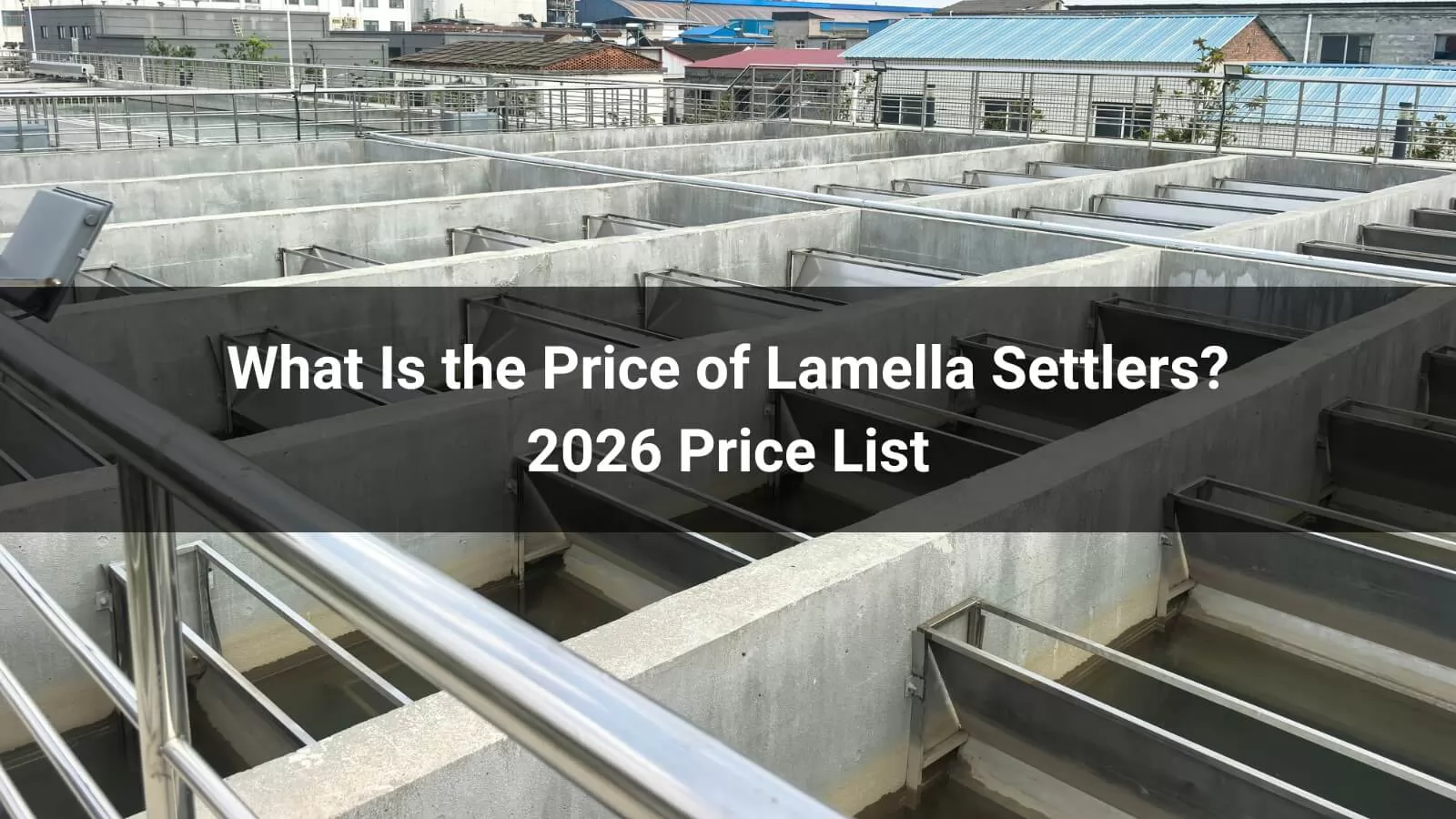
If you're planning a water treatment project in 2026, one of the first questions on your mind is likely: how much does a lamella settler actually cost? The honest answer is that prices vary widely — from a few thousand dollars for a small skid-mounted unit to several hundred thousand for a large custom-engineered system.
In this guide, we break down the 2026 lamella settler price list by capacity, material, and application, plus the hidden cost factors most buyers overlook. Whether you're sourcing for a municipal plant, an industrial facility, or a mining operation, this article will help you budget accurately and negotiate smarter.
At Weilan, we've delivered over 200 water treatment projects worldwide, and we've built this guide using current market data and 15+ years of manufacturing experience. Let's dive in.
| System Size | Typical Flow Capacity | 2026 Price Range (USD) | Typical Buyer |
| Compact / Pilot Units | < 10 m³/h (≈ 45 GPM) | $3,000 – $8,000 | Labs, small workshops, pilot testing |
| Small Industrial | 10 – 50 m³/h (45 – 220 GPM) | $8,000 – $25,000 | Small factories, car washes, food processors |
| Mid-Range Industrial | 50 – 200 m³/h (220 – 880 GPM) | $25,000 – $80,000 | Manufacturing plants, municipal pre-treatment |
| Large Municipal / Industrial | 200 – 500 m³/h (880 – 2,200 GPM) | $80,000 – $200,000 | Mid-sized municipal plants, mining operations |
| Heavy-Duty / Custom Systems | 500+ m³/h (2,200+ GPM) | $200,000 – $600,000+ | Large municipalities, heavy industry, EPC projects |
Capacity is the single biggest driver of lamella settler pricing. The larger the design flow, the more inclined plates, structural support, and tank volume the system requires — but the cost per unit of capacity actually decreases as systems scale up. Below is a detailed 2026 price breakdown organized by flow range, with practical guidance on which tier fits your application.
2026 Price Range: $3,000 – $8,000
These small lamella settlers are typically skid-mounted, prefabricated, and designed for plug-and-play installation. They're popular for pilot studies, laboratory applications, small workshops, and decentralized treatment.
Buyers in this tier should prioritize build quality over price — cheap units often use thinner-gauge steel that warps under continuous load.
2026 Price Range: $8,000 – $25,000
This is the most common range for small-to-mid factories and commercial applications. Most manufacturers offer standardized models in this tier, which keeps prices competitive and lead times short (typically 4–6 weeks).
Standard catalog models dominate this tier. Customization premiums apply if you need 316L stainless steel, narrower plate spacing, or non-standard inlet/outlet arrangements.
2026 Price Range: $25,000 – $60,000
At this scale, lamella settlers transition from "off-the-shelf" to semi-custom engineering. Buyers usually require detailed hydraulic modeling, sludge handling integration, and site-specific structural design.
Expect quotes to vary significantly between vendors at this tier — primarily due to differences in plate surface area, structural rigidity, and tank fabrication standards. Always compare specifications side-by-side, not just headline prices.
2026 Price Range: $60,000 – $130,000
These systems are typically fully engineered and built to project specifications. Lead times extend to 8–12 weeks, and buyers are usually working with consulting engineers or EPC contractors.
At this tier, engineering quality matters more than the lowest price. A poorly designed system at this capacity can lose 20–30% efficiency, costing far more in operational losses than the equipment savings.
2026 Price Range: $130,000 – $300,000
This range is dominated by municipal water and wastewater plants, large industrial complexes, and mining operations. Most systems in this tier are fully customized turnkey solutions.
Projects at this scale typically include detailed engineering drawings, factory acceptance testing (FAT), and on-site commissioning — all of which are usually bundled into the contract price.
2026 Price Range: $300,000 – $600,000+
These are bespoke, project-specific systems — often tailored for major municipal plants, mineral processing operations, or industrial wastewater zones. Pricing is engineered from the ground up based on flow modeling, water chemistry, and regulatory targets.
At this scale, lamella settlers are typically delivered as part of a broader package treatment solution — including coagulation, flocculation, and downstream filtration.
After capacity, material selection is the second-biggest factor influencing lamella settler cost — often accounting for 30–50% of total equipment price. The right material depends on your water chemistry, operating temperature, regulatory requirements, and expected service life. Below is a 2026 breakdown of the most common material and construction options, along with their pricing implications.
2026 Price Premium: Baseline (reference price)
SUS 304 is the most widely used material for lamella settlers worldwide. It offers an excellent balance of corrosion resistance, structural strength, and cost — making it the default choice for municipal water, drinking water, and most industrial applications.
Most catalog pricing referenced in the previous sections assumes SUS 304 construction. This is the benchmark against which all other materials are compared.
2026 Price Premium: +15% to +30% over SUS 304
SUS 316L contains added molybdenum, giving it superior resistance to chlorides, acids, and aggressive industrial wastewater. It's the go-to choice for coastal installations, mining slurry, chemical processing, and pharmaceutical applications.
For a 200 GPM unit that costs $20,000 in SUS 304, expect to pay $23,000–$26,000 for SUS 316L — a worthwhile investment if your influent contains chlorides above 200 ppm.
2026 Price Discount: -20% to -35% below SUS 304
Carbon steel tanks paired with stainless or PVC plates offer a cost-effective hybrid for buyers with limited budgets or non-corrosive applications. The CS structure is typically epoxy-coated or rubber-lined to extend service life.
A 200 GPM CS-tank lamella settler in 2026 typically costs $13,000–$18,000 — versus $20,000+ for full stainless steel construction. However, lifecycle cost analysis often favors stainless steel due to lower maintenance.
2026 Price Impact: -10% to -20% on plate cost
While stainless steel plates dominate premium installations, PVC, FRP (fiberglass-reinforced plastic), and HDPE plates offer a lower-cost alternative for less demanding applications. These materials are lightweight, corrosion-resistant, and chemically inert.
Many manufacturers — including Weilan — offer hybrid configurations combining stainless steel frames with PVC plates to optimize cost and durability. Weilan's standard product line, for example, supports both SUS and PVC plate options, giving buyers flexibility based on budget and application.
Beyond capacity and material, several technical and project-specific factors can shift the final price of a lamella settler by 20–50%. Understanding these key cost drivers helps you write better RFQs, compare quotes accurately, and avoid budget surprises during procurement. Here are the five most important factors that influence lamella settler pricing in 2026.
Flow rate forms the foundation of every lamella settler quote, but the metric that really matters is the hydraulic loading rate — typically 0.5 to 2.0 m³/m²·h. Lower loading rates require more plate surface area, larger tanks, and higher costs, while pushing loading rates higher can reduce equipment cost by 30–40% but compromises effluent quality. Always specify both peak and average flow rates in your RFQ to avoid undersizing.
The dirtier and more complex your incoming water, the more the system will cost. Low-solids influent under 500 mg/L works fine with standard configurations, while medium-solids streams (500–2,000 mg/L) often require finer 50 mm plate spacing, adding 15–20%. High-solids applications above 2,000 mg/L — common in mining and metals processing — typically require upstream coagulation or flocculation, which can add anywhere from $5,000 to $50,000 depending on scale.
How the system removes settled solids is one of the biggest hidden cost variables. Simple gravity discharge is the cheapest baseline option, while multi-hopper bottoms with timed valves add 5–15%. Automated sludge scrapers can add 20–40% to the equipment price, and fully integrated thickening systems can push that premium to 80%. For continuous high-solids applications, the upgrade typically pays for itself within 2–3 years through reduced labor and downtime.
Standard catalog units always offer the lowest prices. As soon as you request non-standard inlet/outlet positions, custom tank dimensions, or integration with existing infrastructure, costs begin climbing — minor modifications add 5–10%, semi-custom builds add 15–25%, and fully bespoke engineering can add 30–60%. Buyers retrofitting existing clarifiers should expect customization premiums, though these are often offset by lower civil works costs.
Lamella settlers rarely operate in isolation, and the supporting equipment often costs as much as the settler itself. Coagulation tanks, dosing systems, sludge pumps, control panels, and downstream filtration can collectively add 40–100% on top of the lamella settler price. When budgeting, always think in terms of total treatment train cost rather than the standalone equipment quote.
Lamella settlers represent a significant capital investment, but smart procurement strategies can save you 15–30% without compromising quality. The key is understanding how manufacturers price their products, where negotiation leverage exists, and which corners are safe to cut versus which ones will cost you dearly down the line. Here are five proven strategies to secure the best price on a lamella settler in 2026.
The single biggest mistake buyers make is requesting quotes with vague specifications. When manufacturers don't know your exact flow rate, influent characteristics, plate material preferences, and certification requirements, they either over-specify (driving up cost) or under-specify (leading to costly change orders later). Provide detailed RFQs with peak and average flow rates, TSS levels, water chemistry, site dimensions, and required certifications — and you'll receive sharper, more comparable quotes that are easier to negotiate.
Pricing for lamella settlers varies dramatically by manufacturing origin, with Chinese suppliers typically offering 60–150% lower prices than Western European or North American equivalents for comparable engineering quality. Always benchmark quotes from multiple regions, but focus on specification-matched comparisons rather than headline prices alone. A $15,000 quote and a $25,000 quote often look very different once you compare plate material, plate spacing, tank gauge, and warranty terms line by line.
Custom-engineered systems can cost 30–60% more than standardized catalog models, and most of that premium delivers little real-world benefit. Unless your application has truly unique requirements, opt for proven standard configurations and adapt your site to the equipment rather than the other way around. Manufacturers like Weilan offer flexible standard product lines — with plate spacing options of 50, 80, and 100 mm and plate lengths from 1.5–3.0 m — that can fit the vast majority of applications without expensive customization.
Every layer of distribution adds 15–30% to the final price. Local distributors and trading companies provide convenience but rarely offer better technical support than working directly with the manufacturer's engineering team. Buying direct also gives you better warranty terms, faster spare parts access, and the ability to negotiate volume discounts for multi-unit orders. For international buyers, modern manufacturers like Weilan handle export logistics, documentation, and even on-site commissioning support — eliminating most of the traditional reasons to use intermediaries.
Lamella settler pricing is sensitive to raw material markets — particularly stainless steel — and to manufacturer capacity utilization. Stainless steel prices typically dip in late Q4 and early Q1 as global demand softens, and Chinese manufacturers often offer aggressive pricing before the Lunar New Year shutdown to clear order books. If your project timeline allows flexibility, scheduling your purchase during these windows can save 5–10% on equipment costs. Conversely, avoid rushed orders during peak construction season (Q2–Q3), when expedited fees and limited capacity drive prices up.
The best deals aren't always the lowest sticker prices. When negotiating with manufacturers, ask for value-added inclusions that cost the supplier little but add real value to you: extended warranty coverage, free on-site commissioning, spare parts packages, operator training, or remote technical support. These add-ons can be worth thousands of dollars and are often easier to win than direct price reductions — especially when you're a serious buyer with a clear specification.
In 2026, lamella settler prices range from $3,000 for compact pilot units to over $600,000 for large custom-engineered systems. For most small-to-mid industrial applications (50–500 GPM), expect to budget between $8,000 and $60,000 for a stainless steel unit. A useful rule of thumb is roughly $300–$600 per m³/h of design flow for a standard SUS 304 lamella settler, though pricing scales down for larger systems and up for premium materials or heavy customization.
Yes — significantly. Lamella settlers require up to 80% less footprint than conventional circular or rectangular clarifiers, which dramatically reduces civil works, land acquisition, and installation costs. While the equipment itself may have a similar or slightly higher price tag, the total installed cost is typically 30–50% lower than traditional clarifiers of equivalent capacity. This is a key reason lamella technology has become the preferred choice for new municipal and industrial projects in 2026.
Service life depends heavily on construction material and operating conditions. Stainless steel SUS 304 units typically last 15–25 years, while premium SUS 316L systems can operate reliably for 20–30+ years. Carbon steel tanks with protective coatings have shorter lifespans of 8–15 years and require periodic re-lining. With proper maintenance — primarily routine inlet flow checks and sludge discharge inspection — a quality stainless steel lamella settler is one of the most durable investments in any water treatment plant.
Lead times vary by configuration. Standard catalog units ship in 4–6 weeks, semi-custom builds take 8–12 weeks, and fully bespoke systems require 12–20 weeks from order confirmation. Add another 4–8 weeks for international shipping, depending on destination. For time-sensitive projects, choosing a manufacturer with proven standardized product lines — and engaging early in the design phase — is the fastest path to delivery.
Yes. Lamella settlers are designed for flexible installation and can be retrofitted into existing clarifiers or sedimentation tanks without major civil modifications. Their modular design allows them to boost the capacity of existing infrastructure by 4–8x within the same footprint, making them one of the most cost-effective upgrade options for plants facing increased flow demands or stricter effluent standards. Retrofit projects typically cost 20–40% less than new clarifier construction.
Pricing a lamella settler in 2026 depends on far more than a single number — capacity, plate material, sludge handling, and customization all combine to shape your final cost. While equipment prices range from under $8,000 for compact units to over $600,000 for large custom systems, the smartest buyers focus on total installed cost and lifecycle value rather than headline pricing. A well-specified stainless steel lamella settler from a reputable manufacturer typically delivers 15–25 years of reliable service, making it one of the most cost-effective investments in any water treatment plant.
If you're ready to move forward with your project, Weilan offers free engineering consultations and customized quotes tailored to your specific flow rate, water chemistry, and site conditions. With 15+ years of experience and over 200 successful projects delivered worldwide, our team helps buyers find the optimal balance of price, performance, and long-term value. Contact us today for a transparent, no-obligation quote.


Your Name*
Your Email*

Compare Submerged Aerated Filter vs. Biological Aerated Filter. Learn the key differences in design, performance, cost, and applications to choose the right system for your project.
Lamella clarifier vs tube settler — compare design, efficiency, cost & durability to find the best settling technology for your water treatment plant in 2026.

Learn the lamella clarifier working principle, key components, types, design tips, and how inclined plate settlers deliver high-rate sedimentation in a compact footprint.


